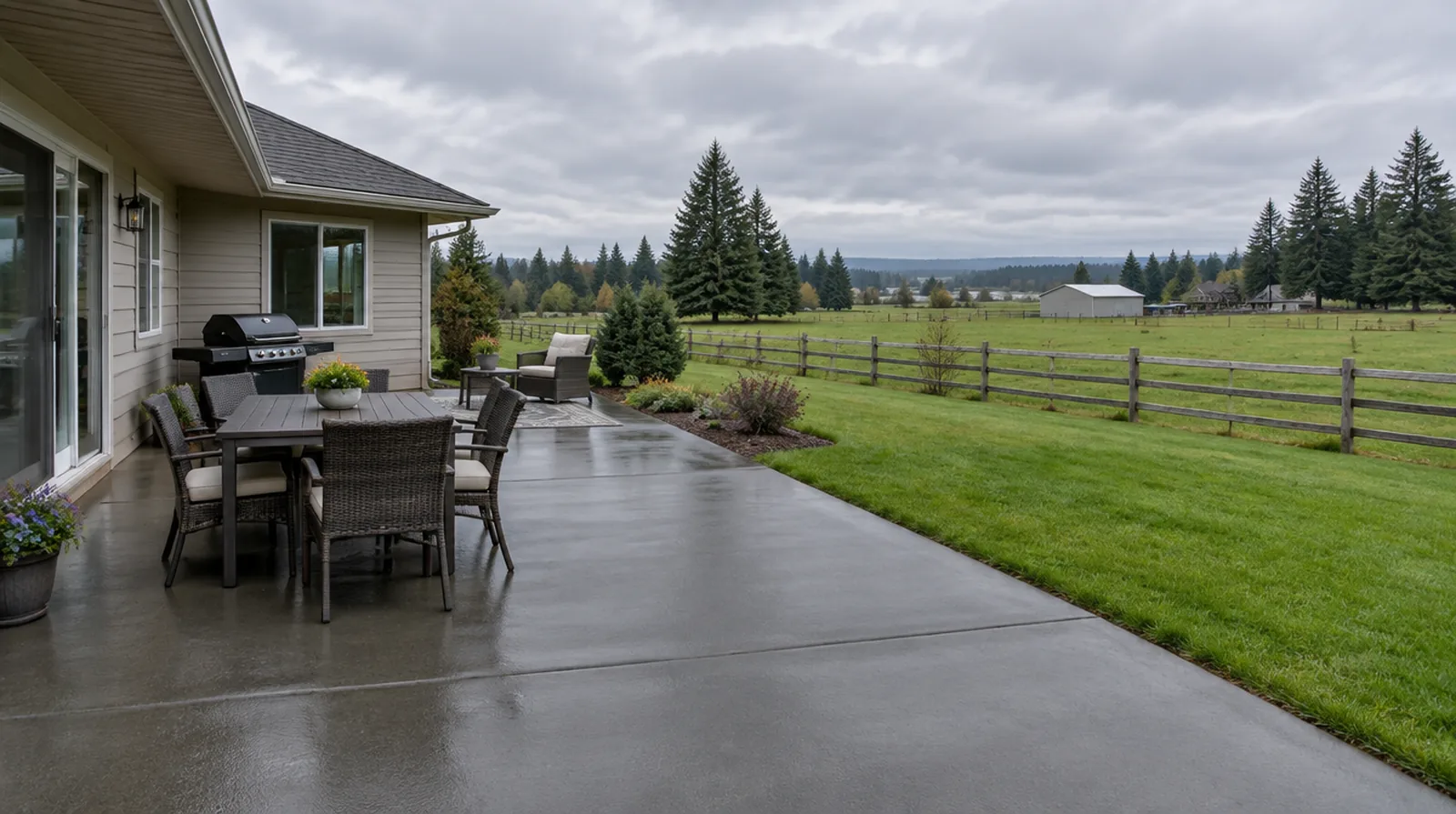
Why seal concrete
Concrete is porous. It soaks up water, which carries dirt, minerals, oil and organic matter into the surface. In the damp months, that moisture feeds moss and mildew on patios and walks and leaves dark stains. When temperatures drop below freezing, trapped water expands and causes scaling and spalling. A good sealer reduces water absorption and protects the concrete for years.
Types of sealers
- Penetrating sealers (silane, siloxane) soak in and repel water without changing the look much. They are ideal for driveways, walks and exterior slabs.
- Acrylic sealers form a thin film that enhances color and adds a sheen. They are good for patios and decorative concrete.
- Urethane and epoxy sealers form harder films for interior and high-wear surfaces.
Where we seal
- Patios and walkways
- Driveways
- Barn aisles and equipment pads
- Garage floors when a full coating is not desired
- Commercial sidewalks and loading areas
- Stamped and colored concrete
Preparation
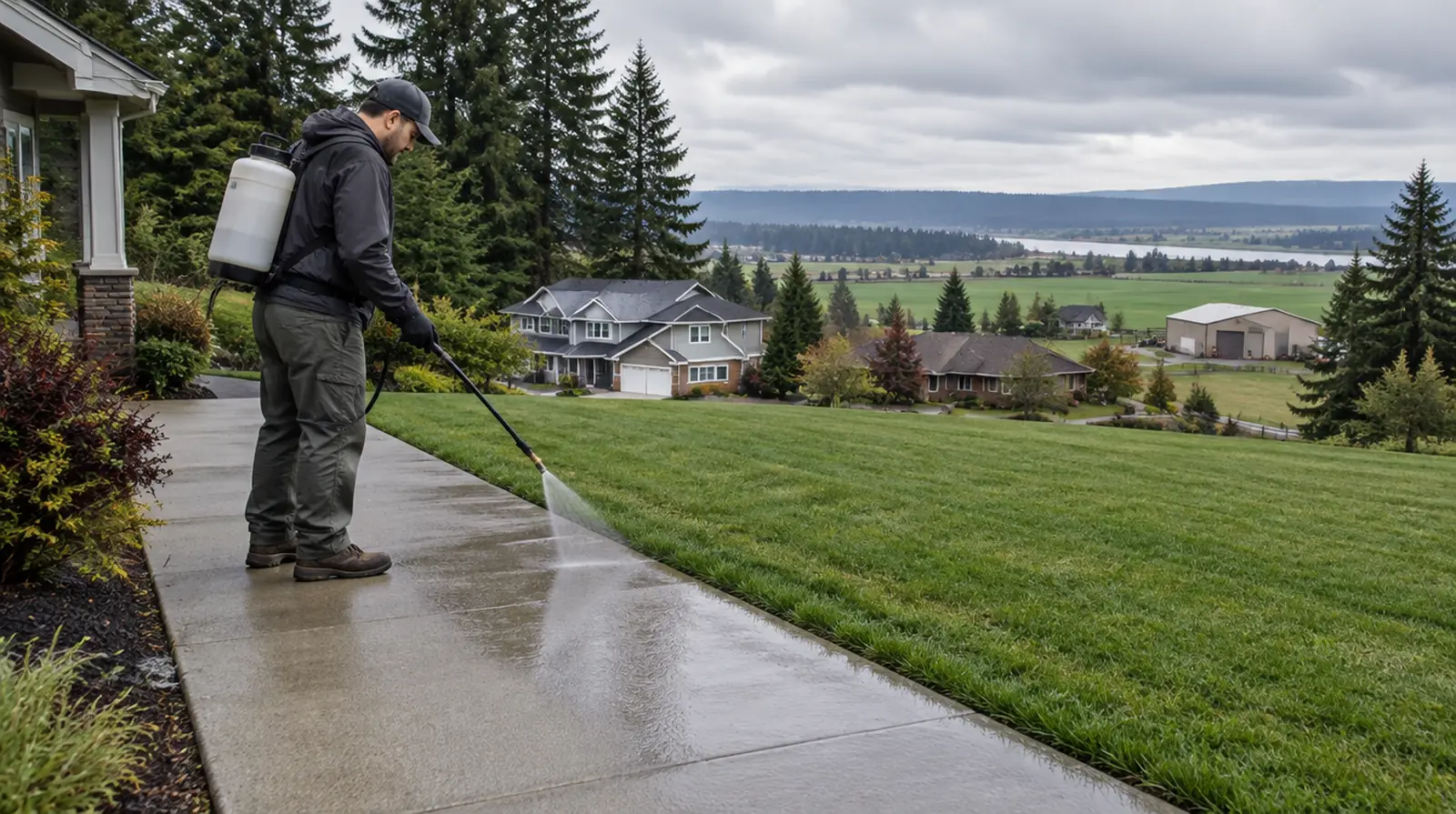
Sealer only works on clean concrete. We pressure wash, treat moss and mildew, remove oil stains as much as possible and let the surface dry. Old sealers that are peeling or cloudy are stripped first.
Timing and weather
Sealing needs a dry surface and a dry window without rain for at least a day. Here, that usually means late spring through early fall. We watch the forecast closely and schedule accordingly.
Moss and mildew
Shaded patios and walks under evergreen trees tend to grow moss and green film. Cleaning and sealing slows regrowth because water does not soak in as easily. Some sealers include additives that further resist mildew.
How long sealers last
Penetrating sealers often last five years or more. Film-forming acrylics typically need recoating every two to three years outdoors. We recommend a schedule based on the product and exposure.
Sealing vs coating
A sealer protects concrete while keeping much of its natural look. A coating covers the concrete with a thick, colored layer. For a garage, a coating offers far more protection against oil and hot tires. For exterior concrete, a sealer is usually the better choice because it breathes.
Barns and equipment pads
Concrete in barns, wash bays and around equipment pads takes a beating from manure, urine, feed, fuel and constant water. A penetrating sealer helps reduce staining and slows damage from acids and freeze-thaw cycles. For interior barn floors that need to be cleaned often, we may recommend a full sanitary coating instead.
New concrete
Fresh concrete benefits from sealing once it has cured, usually around a month after the pour. Sealing early helps a new patio or driveway start out protected before its first wet season.
Garage floors that only need sealing
Not every garage needs a full coating. If you mainly store garden tools and bikes, a clear penetrating or urethane sealer can stop dusting and make oil drips easier to clean. It keeps the natural concrete look and costs less up front. If you later want more protection, the floor can still be ground and coated. We will explain the difference during the visit so you can choose what matches how you use the space.
Our sealing steps
Every sealing job follows the same order: inspect, clean, treat organic growth, repair cracks, let the surface dry fully and apply the sealer evenly in thin coats with sprayers and rollers. We finish by checking coverage at edges and joints, where water tends to get in first, and leave you with care and resealing guidance.
Will sealing make concrete slippery?
Penetrating sealers do not. Film-forming sealers can, so we add grit when needed.
Can you seal stamped concrete?
Yes. It restores color and protects the pattern.
How soon can I walk on it?
Usually within a few hours.
Book concrete sealing
Contact us for a quote.
to book concrete sealing.
Call (360) 322-3560 for a free estimate.